


Views: 152 Author: Site Editor Publish Time: 2026-10-04 Origin: Site


E-commerce packaging is no longer just a basic transit necessity. Today, it operates as a critical driver of your profit margins and brand perception. You cannot afford to treat logistics as an afterthought. Selecting the right corrugated packaging box requires a delicate balancing act across multiple operational departments. You must optimize dimensional (DIM) weight, increase warehouse fulfillment velocity, and keep transit damage below a strict 1.5% target rate. Do you lose money on damaged goods or overspend on unnecessary materials?
Exaggerated claims about indestructible or one-size-fits-all packaging are completely false. Real-world shipping requires calculated trade-offs. You must constantly weigh material costs against manual labor and steep carrier fees. In this article, you will learn how to audit your fulfillment workflow accurately. We will decode board grades and show you how to source the perfect carton. By the end, you will understand exactly how to protect your products without overspending on unnecessary logistics materials.
Matching box style (RSC, mailer, zipper) to your fulfillment workflow directly impacts warehouse labor costs.
Evaluating board strength using Edge Crush Test (ECT) ensures palletized stacking stability and parcel network survivability without over-paying for unnecessary material.
Upgrading to a custom shipping box often yields a positive ROI by reducing void fill costs and mitigating DIM weight carrier penalties.
You face constant tension between transit damage costs and over-packaging waste. When products break in transit, you lose the item's baseline value. You also absorb the cost of reverse logistics, replacement shipping, and customer service labor. However, over-packaging is equally destructive. Buying an oversized ecommerce shipping box wastes capital on excess board material. It forces you to buy expensive void fill to stop the item from rattling. You must find the optimal middle ground.
Shipping carriers like UPS, FedEx, and USPS calculate shipping costs using dimensional weight. They charge you based on the volume a package occupies inside their trucks, not just its physical weight on the scale. A box just one inch too large can destroy your net profit margins. This penalty heavily impacts low-ticket consumer items. If you ship 10,000 orders a month, a half-inch of wasted space generates thousands of dollars in annual carrier penalties.
We must measure the operational impact of your chosen design. Warehouse labor costs fluctuate based on how quickly packers can assemble cartons. A standard taped carton requires a worker to fold flaps, apply tape, and manually square the base. Conversely, a self-locking fold-out carton snaps into place instantly. At scale, saving just ten seconds per order drastically reduces your daily labor overhead.
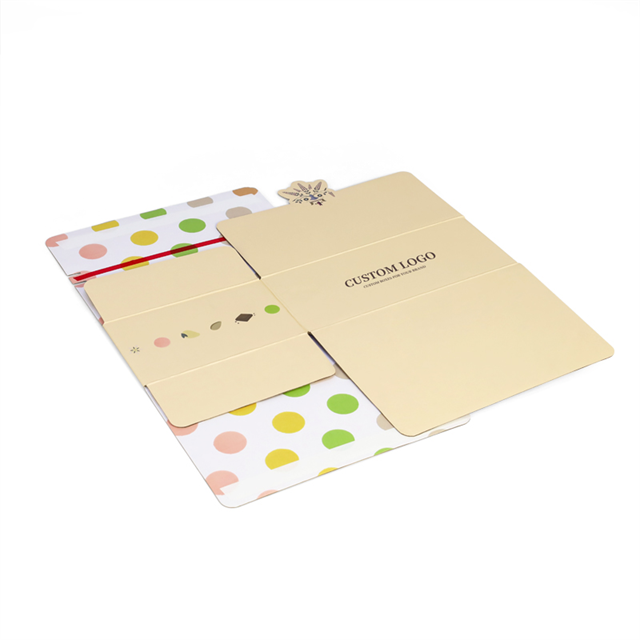
Choosing the correct corrugated paper box style dictates both your packing speed and your customer's final unboxing experience.
Best for: Heavy, bulky, or pre-packaged durable goods.
Evaluation: The RSC style offers the lowest cost per unit. It generates minimal material waste during the manufacturing process. The flaps fold inward and meet squarely in the center. However, this classic design requires manual taping on both the top and bottom. It yields a purely utilitarian unboxing experience. You should use RSCs when transit utility matters more than visual presentation.
Best for: High-value D2C goods, premium apparel, and subscription services.
Evaluation: RETT mailers provide exceptional unboxing appeal. They utilize an intuitive self-locking design. This construction is slightly more expensive per unit than a standard RSC. Despite the higher upfront cost, a RETT mailer often eliminates the need for packing tape entirely. They assemble quickly and offer excellent structural rigidity. The overlapping side walls create extra crush resistance during transit.
Best for: High-security transit and frictionless customer returns.
Evaluation: A zipper paper box features a factory-integrated tear-strip. This feature offers instant tamper-evident security. Customers enjoy a premium, tool-free opening experience. They simply pull the zipper strip to open the package without scissors. Furthermore, these designs usually feature a secondary adhesive strip. This addition facilitates effortless reverse logistics. Customers can reseal the exact same container for returns, improving brand loyalty.
You must define the correct structural architecture for your products. Standard single-wall construction features one fluted medium sandwiched between two outer linerboards. This setup is perfectly sufficient for most e-commerce parcels under 30 lbs. Conversely, double-wall architecture sandwiches two fluted mediums between three linerboards. You mandate double-wall construction when structural liability requires it. Heavy machinery parts, fragile glass, and high-value electronics demand this extra layer of shock absorption.
Flutes determine the thickness and crush resistance of the board walls. Selecting the proper flute reduces your warehouse storage footprint while maximizing protection.
E-Flute: This profile is very thin. It offers high printability and clean graphic reproduction. It is excellent for customized mailers and drastically reduces storage space.
B-Flute: This profile is noticeably thicker. It provides superior puncture resistance. B-flute serves as the industry standard for general parcel transit.
C-Flute: This profile is thicker still. It is ideal for heavier loads. It delivers maximum vertical stacking strength for palletized freight.
Flute Profile Comparison Summary
Flute Type | Approximate Thickness | Primary E-commerce Use Case | Key Operational Advantage |
|---|---|---|---|
E-Flute | 1/16 inch | Custom mailers, cosmetics, electronics | Excellent printability and space saving |
B-Flute | 1/8 inch | General retail goods, canned items | High puncture resistance |
C-Flute | 11/64 inch | Heavy tools, oversized shipments | Maximum vertical stacking strength |
Historically, the packaging industry relied heavily on the Mullen Test to measure bursting strength. The Mullen Test evaluates how much pressure it takes to physically puncture the board wall. However, modern e-commerce relies primarily on the Edge Crush Test (ECT). A 32-ECT rating measures vertical stacking strength. Palletized goods spend days stacked heavily inside trucks and distribution centers. Vertical stacking strength matters far more than bursting strength in standard automated parcel networks.
Standard off-the-shelf sizes are logical for specific business scenarios. You should use them if your operation processes low volume, typically under 500 shipments per month. They also make sense if you sell highly variable product sizes. Stock solutions require minimal upfront financial expenditure. You buy them in small bundles and avoid paying for specialized manufacturing tools.
Upgrading to a custom shipping box is easily cost-justified at scale. Exact-fit dimensions drastically reduce DIM weight carrier fees. Furthermore, a tailored fit eliminates the need for expensive void fill, such as bubble wrap or packing peanuts. You might spend slightly more on the carton itself, but you save massive amounts on shipping fees and protective inserts. A tailored design also elevates the unboxing experience.
We must transparently address the realities of bespoke packaging design. You will face tooling fees for custom cutting dies and flexographic print plates. Manufacturers also impose strict Minimum Order Quantities (MOQs). You cannot buy fifty tailored units; you usually must commit to ordering thousands. Finally, consider the required warehouse storage footprint. You need physical space to hold a multi-month supply of your bespoke inventory.
You must clearly distinguish between internal and external dimensions during procurement. Internal dimensions (Length x Width x Height) determine the exact product fit. They guarantee your item slips inside snugly without rattling. External dimensions dictate your carrier rating. Carriers measure the outside of the closed carton to calculate volume. You must audit both measurements carefully to avoid surprise fulfillment charges.
You cannot trust your supply chain to just anyone. Shortlist suppliers based on strict sustainability certifications, such as FSC or SFI. Local geographic proximity is also crucial. Freight costs on shipping empty cartons are incredibly high. A local partner saves you money on inbound logistics. Finally, demand rigid lead-time guarantees. You need a reliable partner who delivers consistently during Q4 peak holiday seasons.
Never roll out new packaging formats blindly. We recommend shipping 50 to 100 test units through standard carrier networks first.
Assemble the test units using standard warehouse packing protocols.
Insert actual physical products or accurately weighted dummies.
Ship them to varied geographical zones across the country.
Monitor structural integrity immediately upon arrival.
Evaluate the final unboxing presentation before full fleet adoption.
You must approach packaging systematically to protect your profit margins. First, audit your DIM constraints to understand current carrier penalties. Next, select your ideal structural style, whether it is an RSC, mailer, or zipper configuration. Then, specify the correct material by choosing the optimal flute profile and ECT rating. Finally, compare the landed costs of stock solutions versus bespoke options.
We strongly instruct you to audit your top three selling SKUs immediately. Check them for excessive void fill usage and hidden carrier DIM penalties. Document these specific costs. This simple audit establishes a clear baseline for your upcoming packaging redesign and highlights immediate cost savings.
A: The industry terminology is highly specific. "Cardboard" refers to thick, single-layer paper stock. You see this flat material used for cereal boxes or greeting cards. Conversely, "corrugated" contains a fluted paper medium sandwiched securely between two outer linerboards. This engineered architecture provides the necessary structural transit strength to protect heavy goods during shipping.
A: Yes, manufacturing the integrated tear-strip and double adhesive strip adds to the baseline unit cost. However, this expense is often fully offset by warehouse labor savings, as no manual taping is required. Furthermore, the superior return experience drives higher customer retention and brand loyalty.
A: A standard rule of thumb is to measure your primary product first. Next, add 0.25 to 0.5 inches on all sides for safe physical clearance. You must also include exact volume allowances for any necessary void fill, protective wraps, or custom inserts. This ensures a snug fit without bulging the side walls.


