


Views: 0 Author: Site Editor Publish Time: 2026-10-31 Origin: Site


Packaging plays a silent but powerful role in consumer purchasing decisions. Shoppers often ignore flat, standard cartons on crowded retail shelves. Brands constantly struggle to stand out visually. They also must ensure fragile or premium items remain entirely safe during transit. You need packaging solutions that protect your physical product. You also want to create a highly memorable unboxing experience for your buyer.
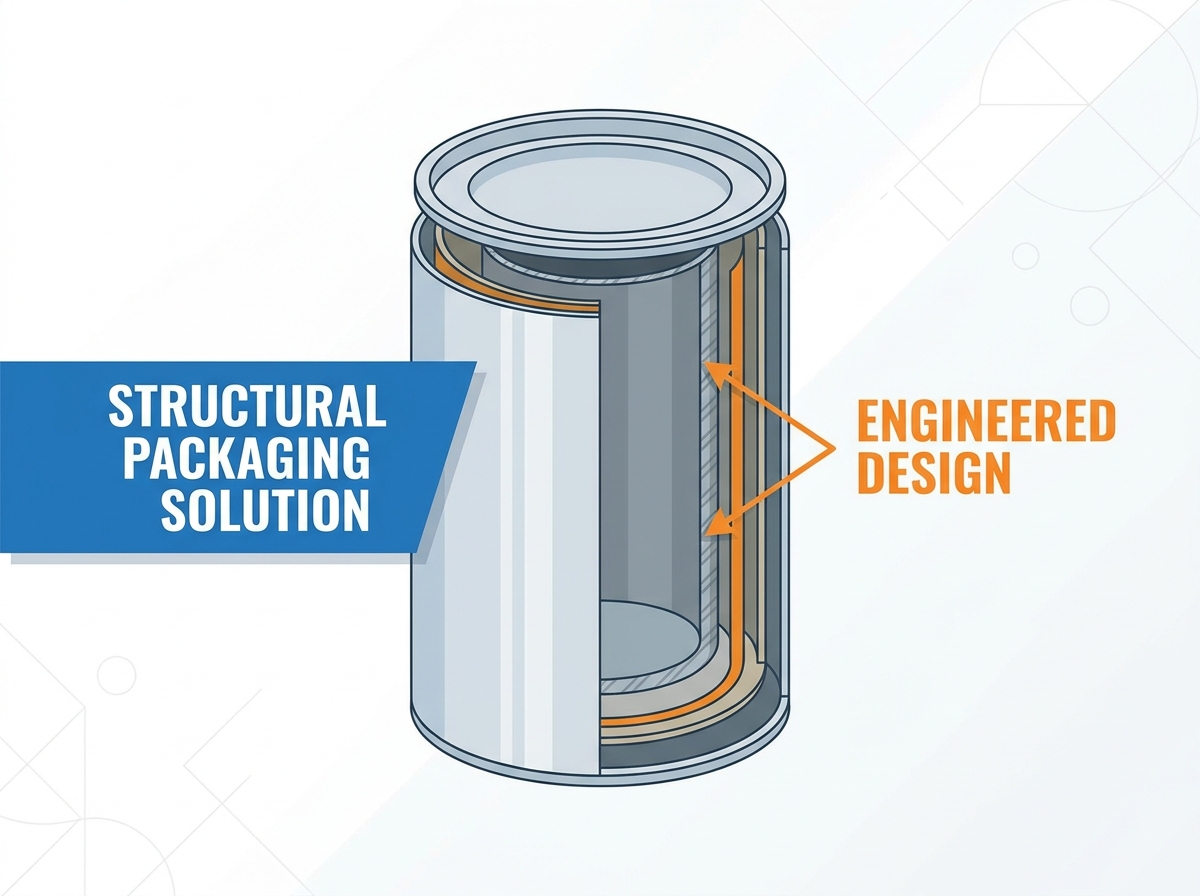
We will explore the modern cylindrical container far beyond its basic aesthetics. You will see it serves as a highly engineered structural packaging solution. We will examine how these curved containers function practically across various retail industries. You will also learn about essential material choices and advanced customization techniques. This guide helps you confidently select exact specifications for your upcoming product launch.
Many buyers mistakenly view round containers as merely decorative additions. In reality, they offer superior structural integrity. The circular design naturally absorbs external impacts. This shape prevents crushing during complex shipping routes. Understanding these hidden mechanical benefits transforms your procurement strategy. By the end of this article, you will know exactly how to leverage this unique format. You will capture customer attention effortlessly and elevate your overall brand identity.
A round container differs fundamentally from traditional square boxes. It relies on continuous curves rather than hard right angles. Physics dictates pressure distributes evenly across a circular surface. Traditional square boxes often fail at their corners upon impact. A curved wall redirects external forces smoothly. This makes the structure incredibly resilient against vertical crushing. You get superior protection for heavy or delicate goods.
Engineers design these containers using precise mathematical tolerances. A standard Cylinder box typically features three distinct components. You have the structural core tube, the base plug, and the top closure. We often call this top closure a cap or lid. Manufacturers roll the paper tightly around steel mandrels. This rolling process creates exceptional rigidity. The layers bond together using specialized industrial adhesives. Once cured, the tube acts almost like a solid piece of wood.
You can choose from several lid mechanisms based on your product needs. Telescopic lids slide entirely over the inner tube body. They create a seamless exterior profile. Flush-fit lids sit perfectly even with the outer wall. They offer a sleek and modern appearance. Manufacturers often use rolled edges on both the top and bottom. A rolled edge folds the paper inward. This technique hides raw paper edges and reinforces the opening.
Continuous structural integrity: Eliminates vulnerable corners entirely.
Even force distribution: Protects fragile inner contents from crush damage.
Friction-fit closures: Creates a satisfying vacuum seal during the unboxing process.
Rolled edge reinforcement: Prevents fraying and extends the usable lifespan.
Your choice of raw material dictates both the look and the strength of the final product. Paper remains the undisputed primary ingredient. We classify this paper by GSM, which stands for Grams per Square Meter. Higher GSM numbers indicate thicker, heavier paperboard. The core structure usually requires rigid kraft board ranging from 800 to 1200 GSM. This inner core provides the actual physical skeleton.
Manufacturers then wrap this thick core in a thinner, decorative outer layer. This outer wrap usually consists of 157 GSM art paper. Art paper accepts printing inks beautifully. You achieve sharp images and vibrant colors. Some brands prefer a more natural aesthetic. They choose brown or unbleached kraft paper for the exterior. This choice instantly communicates eco-friendliness to your buyers. It feels raw, textured, and highly organic.
Sustainability plays a massive role in modern Cylinder Box packaging. Consumers actively seek biodegradable options. Many suppliers now hold FSC (Forest Stewardship Council) certifications. FSC certification guarantees the paper comes from responsibly managed forests. Using soy-based inks further reduces environmental impact. These inks break down easily during municipal recycling processes. You must verify these certifications before finalizing any large supplier contracts.
Inner linings also require careful consideration. Dry goods need protection from outside moisture. Manufacturers solve this by applying food-grade aluminum foil linings. They might also use PE (Polyethylene) coatings on the inside. These barrier layers block oxygen and humidity. They keep coffee beans fresh or prevent skincare oils from seeping outward.
Various industries utilize this curved packaging format to elevate their merchandise. The shape feels inherently premium in the consumer's hands. It breaks the visual monotony found on retail shelves. Let us examine how specific sectors apply these containers.
Cosmetics and Personal Care: Perfume bottles and heavy glass skincare droppers need robust protection. A snug inner fit prevents rattling. The elegant exterior matches high-end beauty branding.
Food and Beverage: Premium loose-leaf tea and artisan roasted coffee thrive in this format. An airtight Cylinder Box packaging solution extends shelf life. The aluminum lining blocks damaging UV light.
Apparel and Accessories: Brands roll t-shirts, silk scarves, or belts into tubes. This prevents hard creases. It also creates a highly giftable retail presentation.
Spirits and Wine: High-end whiskey bottles frequently use tall round tubes. The thick cardboard protects the heavy glass. It also provides ample surface area for storytelling graphics.
You must tailor the internal dimensions strictly to your product. A loose fit causes damage during transit. Always design custom internal inserts. Foam or molded pulp holds the item perfectly centered. This prevents movement and enhances the premium feel upon opening.
Choosing between round and square formats requires evaluating several distinct factors. You must balance visual appeal against logistical efficiency. Square cartons ship flat. This saves immense space during initial transport from the manufacturer to your facility. However, they lack the unique tactile engagement of a curved surface.
Round tubes cannot ship flat. They arrive fully formed. This requires more warehouse storage space. However, they eliminate the labor time required to assemble flat boxes. Your packing team simply drops the product inside and attaches the lid. You save significant fulfillment time on the warehouse floor.
Packaging Shape Comparison Matrix
Assessment Feature | Round Tube Container | Traditional Square Carton |
|---|---|---|
Structural Strength | Excellent vertical crush resistance | Vulnerable to corner impacts |
Pre-fulfillment Storage | Requires higher volume space | Ships flat, highly space-efficient |
Assembly Labor | Zero assembly required | Requires folding and taping |
Retail Shelf Appeal | High differentiation, premium feel | Standard appearance, blends in |
Printable Surface Area | Continuous 360-degree canvas | Separated into distinct flat panels |
The unboxing experience also differs greatly. A telescoping round lid creates a slight vacuum seal. The customer feels a gentle resistance as they pull it open. This sensory detail signals high quality. Square boxes usually use simple tuck flaps. They open quickly but lack dramatic tension. You must decide which experience best fits your brand positioning.
Your exterior surface serves as a blank canvas for brand storytelling. A continuous 360-degree wrap allows for seamless graphic designs. You do not have to worry about sharp corners interrupting your artwork. Designers can create panoramic landscapes or repeating geometric patterns.
Print finishing techniques elevate the tactile experience. Soft-touch matte lamination feels like velvet. It encourages the customer to hold the product longer. Spot UV gloss adds a shiny, raised texture to specific logos. Hot foil stamping applies metallic gold or silver directly to the paper. Foil catches the light beautifully on retail shelves. It immediately signals luxury to a passing shopper.
Size variations offer another layer of customization. Some brands sell oversized items like rolled playmats or bulk protein powder. A standard tube will not work here. You must source a Large cylinder box built with reinforced, extra-thick walls. Larger diameters require stronger core boards to prevent the shape from warping. Always request physical samples to test the rigidity of larger dimensions.
Internal customization is equally crucial. You can print patterns on the inside wall. When the customer opens the lid, they discover a hidden pop of color. You can also specify custom cutouts. A die-cut foam insert holds delicate electronics perfectly. A molded pulp tray offers a sustainable alternative to plastic foam. Every detail contributes to the perceived value of your product.
Selecting the right manufacturing partner determines your project's success. Not all packaging factories specialize in rolled paper tubes. You need a supplier possessing dedicated mandrel winding equipment. Ask potential vendors about their daily production capacity. Inquire about their quality control procedures regarding adhesive curing times.
Pay close attention to Minimum Order Quantities (MOQ). Custom-printed round containers usually require higher MOQs than plain square boxes. Setting up the printing presses and steel rolling mandrels takes time. A standard MOQ often sits around 1,000 units. Some premium factories demand 3,000 units. You should negotiate this number early in your discussions.
Always demand a structural prototype before approving mass production. You need to physically test your exact product inside the sample. Check the friction of the lid. It should slide off smoothly but not fall off when inverted. Verify the inner diameter allows enough clearance for your item. You want to avoid a Cylinder box that feels too tight or impossibly loose.
Consider environmental factors during ocean freight shipping. Paper absorbs moisture naturally. High humidity inside shipping containers can warp cardboard tubes. The adhesive might weaken over a long sea voyage. A common mistake is forgetting to request moisture protection. Always instruct your supplier to include silica gel packets inside the master export cartons. They should also wrap the master cartons in protective plastic film.
Choosing round packaging transforms how consumers perceive your physical product. It moves your brand away from standard retail presentations into a premium category. You gain substantial structural benefits alongside unique visual appeal.
Utilize the natural structural integrity of curved walls to protect fragile goods effectively.
Select appropriate material thicknesses and inner linings based entirely on your product type.
Invest in tactile finishing techniques like soft-touch lamination or foil stamping to enhance luxury.
Always order structural prototypes to verify lid friction and internal dimensions before mass production.
Take immediate action by auditing your current product lineup. Identify items suffering from poor shelf visibility or high shipping damage rates. Contact specialized tube manufacturers to request physical material samples. Start designing your continuous 360-degree artwork today to elevate your next product launch.
A: Yes, most are entirely recyclable. If the tube consists only of kraft paper and water-based adhesives, you can place it in standard paper recycling. However, tubes containing aluminum foil linings or heavy plastic laminations require specialized recycling facilities. Always check with your supplier regarding exact material composition.
A: Measure the maximum width and total height of your physical item. Add approximately two to three millimeters of clearance to the inner diameter. Add about five millimeters to the inner height. This ensures the product slides in smoothly without getting permanently stuck inside the base.
A: Yes, internal printing is highly popular. Manufacturers print the design on a thinner paper sheet first. They then wrap this printed sheet around the innermost core layer during the winding process. It adds a premium surprise element during unboxing.
A: Sometimes they do. Round shapes cannot pack as tightly as square boxes inside master shipping cartons. This leaves small pockets of empty air, increasing the dimensional weight. You should calculate shipping costs based on the master carton size rather than individual unit dimensions.


