


Views: 123 Author: Site Editor Publish Time: 2026-10-16 Origin: Site


Transitioning a packaging concept from a digital design to a physical product requires balancing aesthetics, structural integrity, and unit economics. It takes precise planning to succeed in today's competitive retail landscape. For B2B buyers and brand managers, selecting the right combination of substrates and finishes dictates the final unboxing experience. Furthermore, it directly influences your shipping logistics, product protection capabilities, and sustainability compliance. Making an informed material choice transforms a standard container into a powerful brand asset.
This guide breaks down how to specify materials and finishes based on product weight, brand positioning, and budget realities. You will learn how to build the ideal gift packaging box for your specific market needs. We cover structural bases, aesthetic paper wraps, and premium tactile elements to ensure your project arrives safely and looks exceptional.
Structural material must be dictated by product weight and shipping methods; aesthetic wrapping papers come second.
Premium finishes (like foil stamping and embossing) require specific paper bases to prevent cracking or warping.
Sustainability mandates are shifting material choices toward FSC-certified paper and plastic-free laminations for the 2024–2026 production cycles.
Factoring in tooling costs and Minimum Order Quantities (MOQs) is essential when specifying custom finishes.
You must establish your functional requirements before browsing paper swatches or finish options. A beautiful design fails if it crushes during transit. Assess your product needs first to avoid costly remanufacturing.
Define the primary function of your packaging. Fragile or heavy items require substantial support. You will typically need high-GSM (Grams per Square Meter) rigid boards or corrugated bases to prevent compression damage. Glassware, heavy electronics, or luxury spirits demand ultimate rigidity. Conversely, lightweight items like lipsticks, apparel, or small accessories can utilize folding cartons. Folding cartons use thinner paperboard, offering sleek presentations without unnecessary bulk.
You must acknowledge the hidden logistical costs of rigid setups. Pre-assembled luxury boxes offer a phenomenal premium unboxing experience. However, they exponentially increase volumetric shipping weight compared to flat-packed alternatives. Shipping empty space eats into your margins rapidly. If you ship internationally or store inventory in expensive third-party logistics (3PL) warehouses, consider foldable rigid designs or high-end corrugated mailers. They ship flat and assemble quickly, balancing luxury presentation and supply chain efficiency.
Establish a clear framework for cost division before requesting vendor quotes. A common industry best practice divides your packaging budget into three core areas:
Structural Base (60%): Allocate the majority of your budget to the underlying board. This ensures durability and protects the product.
Wrapping Material (20%): Dedicate a portion to the visible paper or fabric wrap. This dictates the immediate visual and tactile impression.
Surface Finishes (20%): Reserve the remainder for high-impact embellishments like foil, embossing, or spot UV treatments.
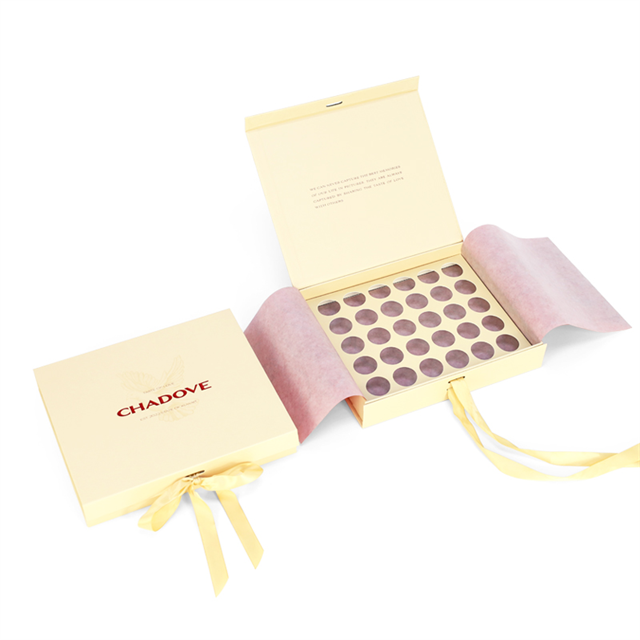
The structural core determines how your paper gift packaging behaves under stress. You must select a base material capable of supporting your product weight while accommodating your desired exterior aesthetic.
Rigid greyboard represents the pinnacle of premium packaging. Manufacturers create it by compressing recycled paper fibers into thick, dense sheets.
Best for: Consumer electronics, fine jewelry, luxury spirits, and VIP corporate kits.
Specifications: Thickness typically ranges from 800gsm (about 1.2mm) to 1800gsm (about 3mm).
Pros: Delivers maximum durability, sharp corners, and immense perceived value. It feels substantial in the hand.
Cons: Carries high manufacturing costs. It requires specialized machinery to V-groove and fold. As mentioned earlier, it ships fully assembled, driving up freight costs.
Corrugated board utilizes fluted paper sandwiched between two flat linerboards. It provides exceptional strength-to-weight ratios.
Best for: Direct-to-consumer subscription boxes, mailers, and heavy fragile items.
Specifications: E-flute (1.5mm) or F-flute (0.8mm) offer a refined, less bulky look. They maintain high crush resistance without looking like standard shipping cartons.
Pros: Highly protective and extremely cost-effective. It absorbs impacts easily.
Cons: It can feel less "premium" than rigid board unless you wrap it or apply heavy, specialized finishes. The fluting lines occasionally show through thin top sheets.
Solid Bleached Sulfate (SBS) is a pure white, medium-weight paperboard. Kraft board provides a similar weight but retains a natural brown appearance.
Best for: Apparel, standard cosmetics, and point-of-sale retail items.
Specifications: Generally ranges from 250gsm to 400gsm.
Pros: Highly printable, holds bright colors perfectly, and remains very cost-effective. It ships entirely flat.
Cons: Lacks the structural rigidity needed for high-end corporate gifting or heavy objects. It tears or crushes under heavy loads.
Base Material Comparison Chart
Material Type | Typical Thickness | Primary Use Case | Shipping Profile |
|---|---|---|---|
Rigid Greyboard | 800gsm - 1800gsm | Luxury, Jewelry, Electronics | Ships Assembled (Voluminous) |
Corrugated (E/F Flute) | 0.8mm - 1.5mm | E-commerce, Subscriptions | Ships Flat (Efficient) |
SBS Paperboard | 250gsm - 400gsm | Cosmetics, Retail, Apparel | Ships Flat (Highly Efficient) |
Once you select a structural base, you must choose a wrapping paper. This outer layer dictates the immediate visual appeal and the physical feel of the packaging. Different wraps interact with printing inks and finishes in drastically different ways.
Coated art paper serves as the industry standard for commercial packaging. Manufacturers apply a light clay coating to one side (C1S) or both sides (C2S). This smooths out the natural paper fibers. The coating prevents ink from soaking deep into the sheet. As a result, colors remain highly vibrant, sharp, and precise. It works best for photographic prints, complex color gradients, or intricate brand illustrations. It also accepts protective laminations exceptionally well.
Uncoated papers bypass the clay treatment. They provide a raw, organic, or fabric-like tactile feel. You can find specialty options mimicking linen, wood grain, or soft velvet touch. They elevate the perceived value instantly.
Writer Note: You must exercise caution here. Uncoated papers absorb ink differently than coated stocks. The ink sinks into the fibers, causing "dot gain." Colors often appear slightly muted or darker than they look on a digital screen. Achieving vibrant colors on textured paper requires skilled offset printing adjustments and specialized UV inks.
Kraft paper acts as the default choice for eco-conscious branding. It communicates sustainability immediately. Using 100% post-consumer recycled paper aligns well with modern environmental values. However, you must discuss the trade-offs with your design team. The natural brown or grey substrate limits color vibrancy. Translucent offset inks mix with the dark base color, muddying bright reds or yellows. For best results on Kraft, use bold, dark inks, black vector graphics, or opaque metallic foils.
Elevating a basic structure into a premium custom gift box requires thoughtful embellishments. Surface finishes catch the light, add texture, and create memorable brand interactions. However, they demand careful technical execution.
Hot foil stamping transfers a thin metallic film onto the paper using heat and pressure. Designing a foil stamped box adds immediate luxury. It works beautifully for logos, intricate borders, and high-contrast typography. When making decisions, always factor in tooling costs. Your manufacturer must mill a custom brass or magnesium die for every foil design. Warn your design team against applying intricate foil details over heavily textured uncoated papers. The rough surface prevents the foil from adhering smoothly, leading to broken lines or flaking edges.
These techniques reshape the paper fibers. Embossing raises the design above the surface, while debossing presses it inward. Creating an embossed packaging box provides a high-tactile premium feel. You can use blind embossing (no ink, just texture) or register the stamp precisely over printed artwork. This finish requires thicker, high-quality fiber paper. Thin or brittle paper will tear under the heavy pressure of the metal dies. Embossing carries minimal environmental impact compared to plastic laminations, making it a highly sustainable luxury option.
Coatings and laminations are essential for scuff resistance. They protect dark inks from scratching during shipping. However, brands face a friction point here. A Soft-Touch lamination feels incredibly luxurious, resembling suede. Yet, traditional plastic laminates complicate the recycling process at local facilities. To maintain eco-compliance, advocate for aqueous (water-based) coatings or emerging bio-laminates. They provide adequate protection while dissolving easily during the paper repulping process.
Moving from a beautiful 3D render to mass manufacturing introduces real-world risks. Failing to validate your designs structurally or ignoring upcoming regulations can derail an entire product launch.
Never approve mass production based solely on a digital dieline or a 3D mockup. Always request a blank physical dummy, commonly called a white sample. You must test this sample with the actual product weight inside. Shake it, drop it, and simulate shipping conditions. A board material might feel sturdy when empty but warp under the stress of a heavy glass candle. Testing physical prototypes highlights dimensional errors or closure failures before you waste money on printed units.
The regulatory landscape is changing rapidly. Brands must navigate tightening Extended Producer Responsibility (EPR) laws across Europe and North America. These laws hold manufacturers financially responsible for the end-of-life disposal of their packaging. To prepare for 2026 compliance trends, shift toward mono-material designs. A mono-material package uses only one type of substrate, making consumer recycling effortless. Avoid gluing clear plastic windows into paper boxes. Eliminate hidden non-recyclable magnetic closures embedded in rigid board. Instead, secure lids with paper friction fits, ribbon ties, or interlocking tabs.
Procurement teams often experience sticker shock when quoted for highly finished runs. You must understand why these finishes require higher Minimum Order Quantities (MOQs), typically starting around 500 to 1000 units. Custom boxes require significant upfront manual labor. Factory technicians must build cutting dies, mill foil stamping plates, and calibrate massive offset printing presses. If you only order 100 boxes, these heavy setup costs spread across very few units, causing astronomical per-box prices. Ordering 1000 units amortizes the setup costs effectively, dropping the unit price into a reasonable range.
The most effective packaging aligns your structural necessities with targeted, high-impact aesthetic finishes. Do not over-engineer a lightweight retail box, and do not under-protect a heavy luxury item. By pairing the correct core board with strategic wrapping paper and thoughtful embellishments, you create a memorable and cost-effective unboxing experience.
Your next steps require precise action. Finalize your exact product dimensions and weight. Determine your logistics model to decide between flat-packed or pre-assembled structures. Finally, compile this data into a detailed tech pack and request a physical structural sample from a vetted, experienced packaging manufacturer.
A: The most durable material depends on your logistics. High-GSM rigid greyboard (1200gsm+) offers unmatched structural rigidity and crush resistance for premium presentation. However, if the box ships individually without a protective master carton, E-flute or F-flute corrugated board provides superior impact absorption and tear resistance during postal transit.
A: Yes, it generally costs more initially. Embossing requires the factory to mill custom metal dies and spend time calibrating the stamping machines. These upfront tooling and setup fees increase the starting price. However, as your order volume scales up, the unit cost drops significantly, making it very affordable for larger runs.
A: Yes, in most cases. Hot foil stamping transfers an ultra-thin metallic layer onto the paper. Standard recycling facilities generally accept this because the metallic flakes separate easily during the repulping process. This differs greatly from full metallic PET plastic laminations, which render the entire box non-recyclable.


